Rock Solid Stone Chat with Cullifords

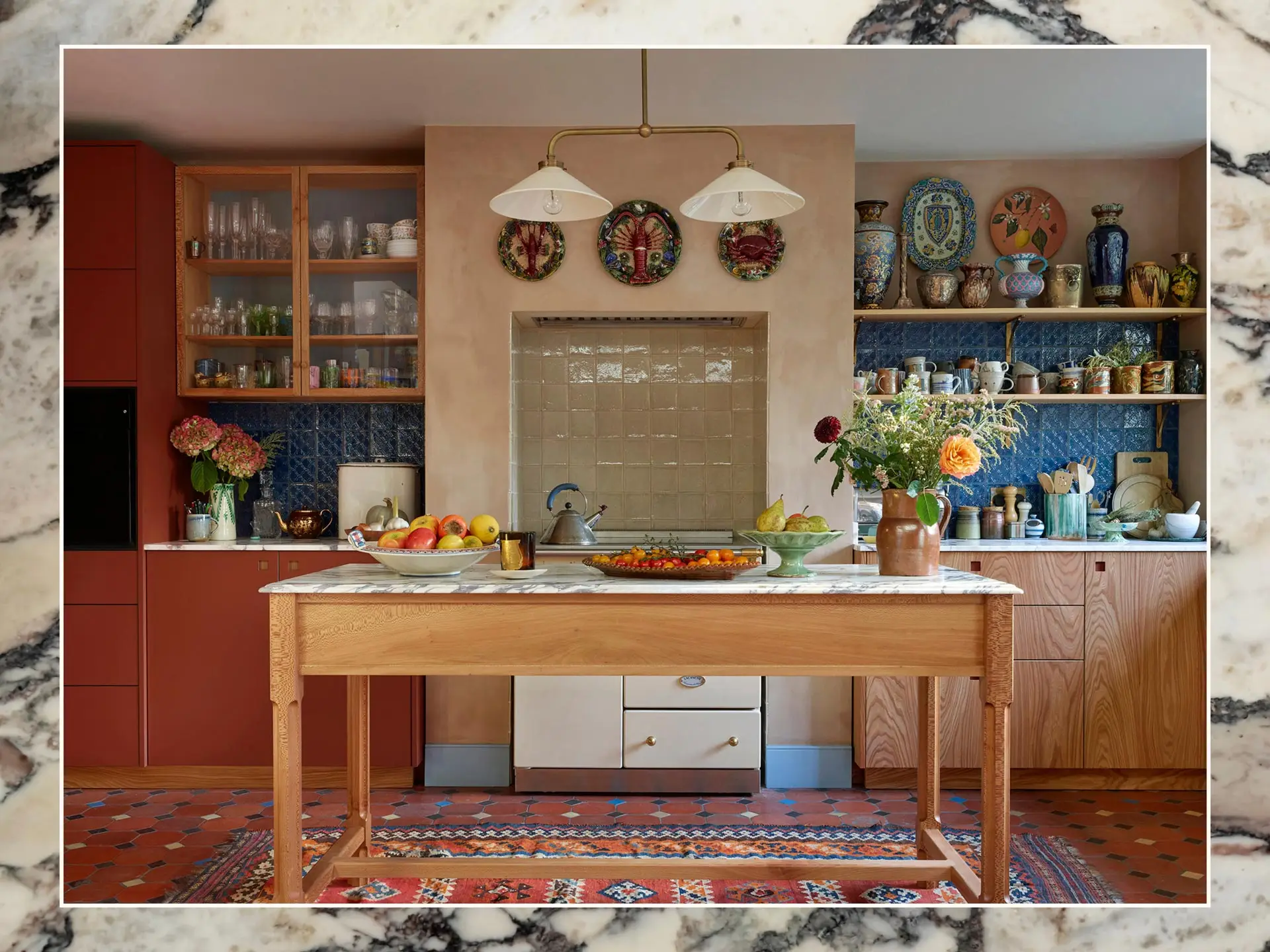


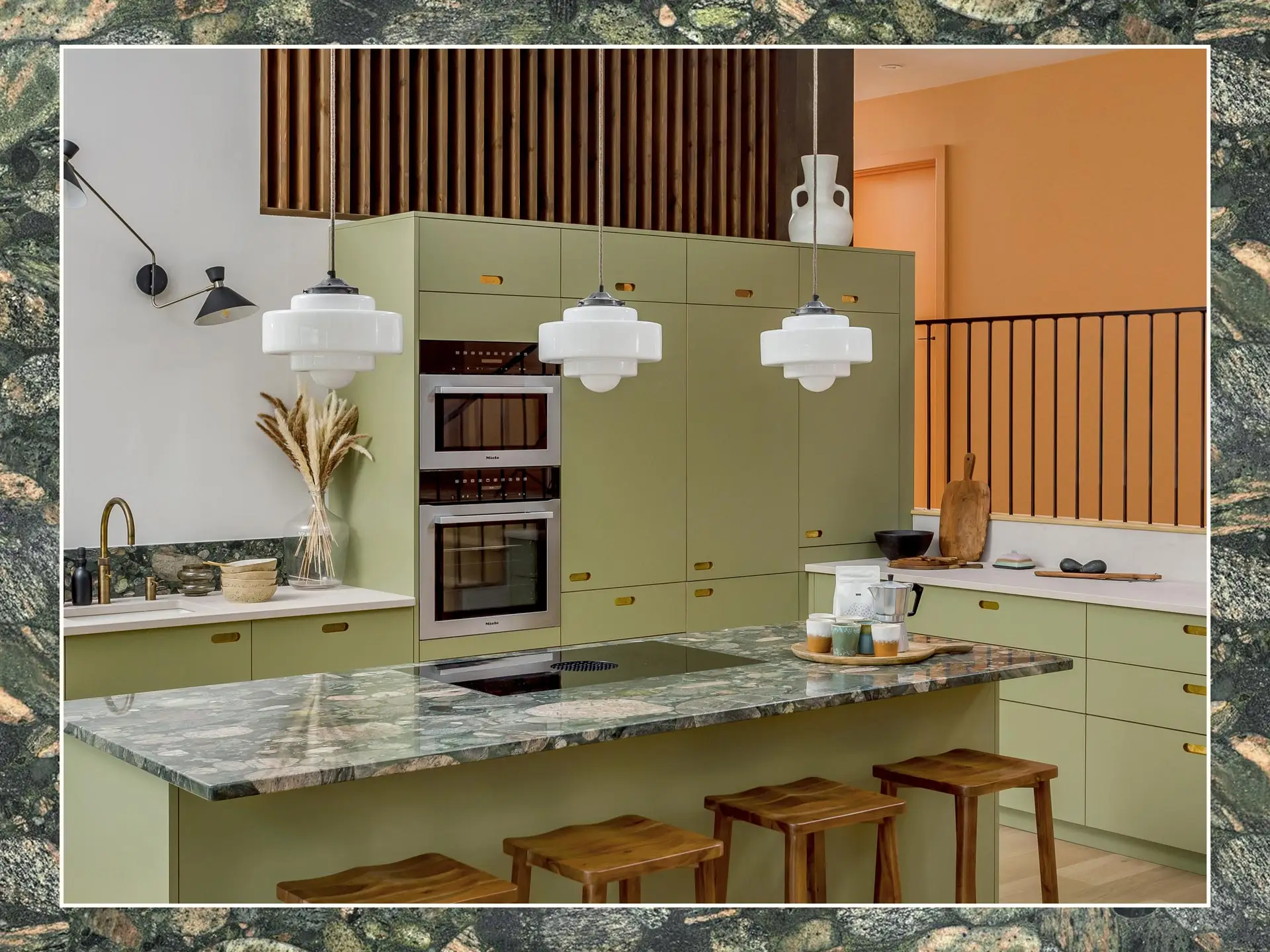
It’s always a joy to see what lovely material (or multiple!) our clients choose to top their Pluck cabinetry and furniture…one of the wonderful options being luxurious natural stone. At Pluck HQ we have worktop samples galore and our design team have a little black book of suppliers, including Cullifords who we’ve been working with for years! We recently had the pleasure of asking Oliver Webb, Director at Cullifords, all of our burning stone questions. Big thanks for all the fun facts, top tips, family favourites and more…enjoy!

Pluck-Kitchen-x-Cullifords-Journal-04
Oliver Webb, Cullifords Director
Tell us a bit about the history of Gerald Culliford…you’ve been in the game for a long time!
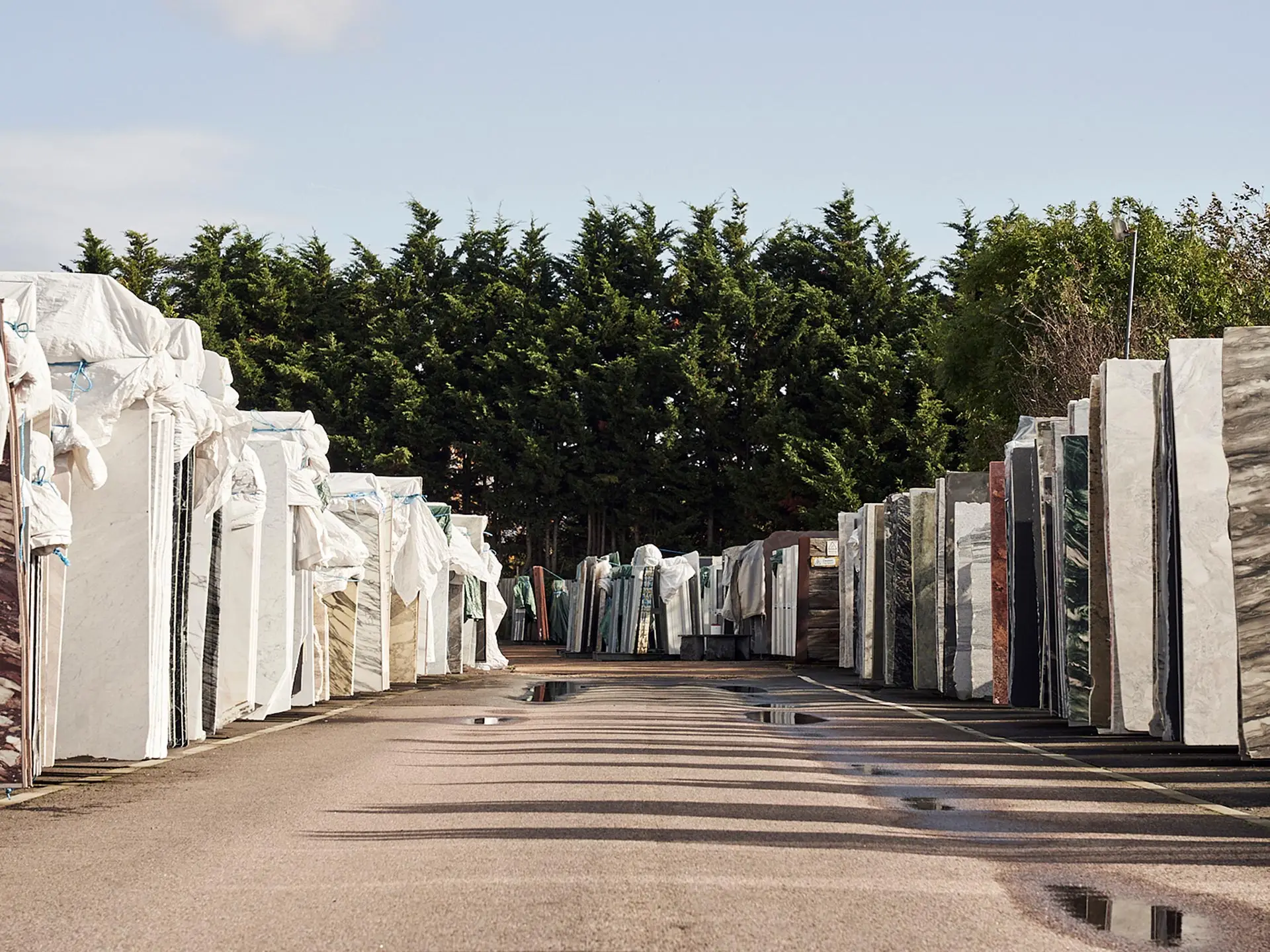
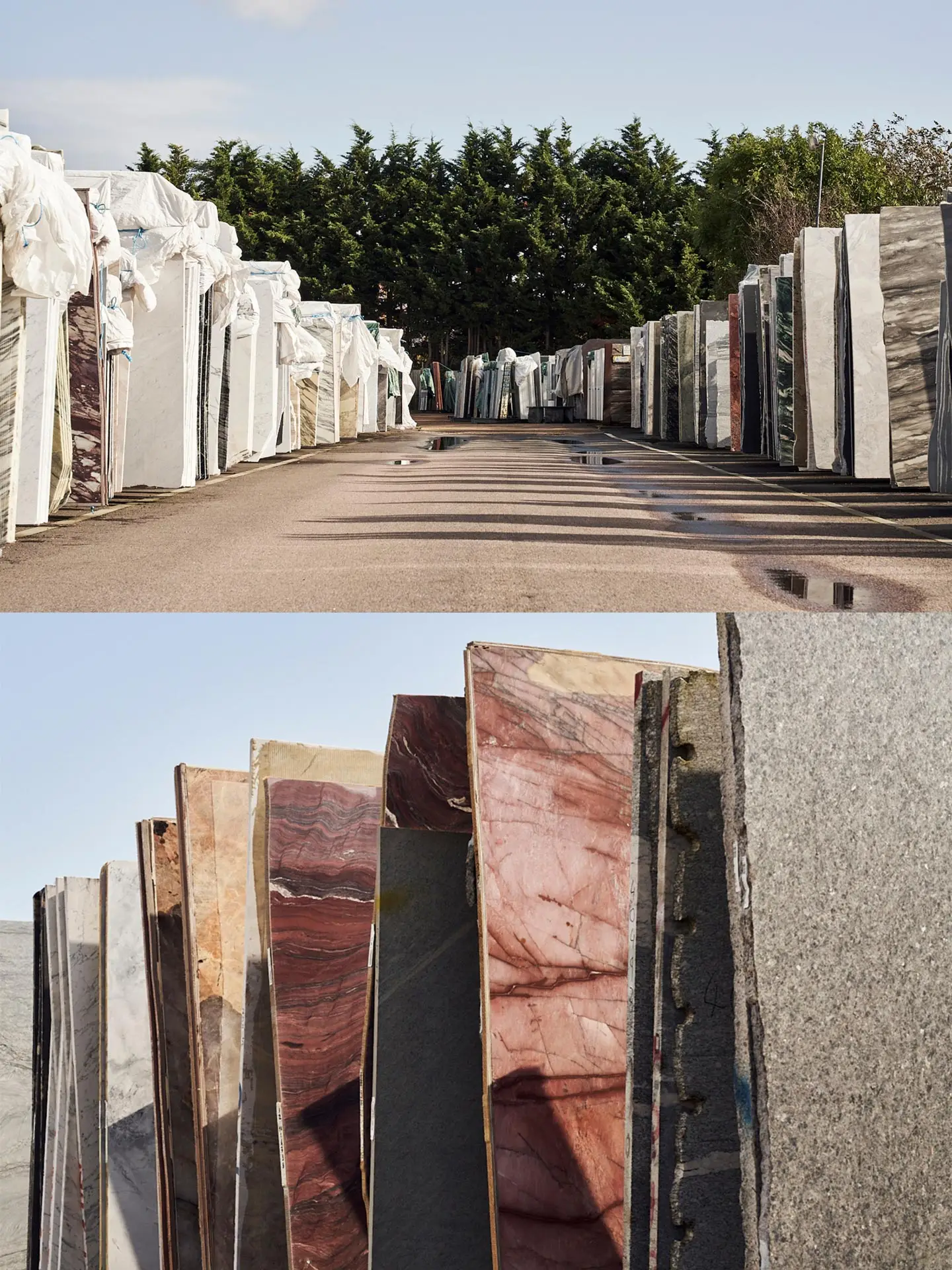
Cullifords has been in the stone business for over 60 years, although the story goes back further than that. Our history reaches back to the Culliford family before the war, and to the historic stone companies of Carrara in Italy, while stone has been sold from our London/Surrey site for nearly 100 years. Today the Kingston yard holds more than 3,000 slabs, but the principles are much the same: find interesting, good-quality stone, know it properly and give people honest advice about where it will work.
And your own story…do you love rocks?!
Yes! I’ve always had an interest in geology, ever since GCSEs and A levels (don’t ask what I got in A level Geo though). I also did Business Studies (A level & Degree), which complements well with James’s (business partner) degree in Geology!!
Is natural stone practical for kitchens?
Yes – provided you choose the right stone for the way you live. That is why there isn’t a completely clear-cut answer. A dense granite or a true quartzite can be extremely hard-wearing, whereas marble is softer and acid-sensitive, so lemon, wine and similar substances can etch it even when it is sealed. Marble can still make a wonderful worktop if you are happy for it to develop a patina. The key is matching the material to the client’s expectations rather than pretending every natural stone behaves in the same way.
What do you look for in a good piece of stone?
It is a mixture of aesthetics and structure. We look at the balance and direction of the veining, colour, natural variation and how several slabs from a block work together, but also at fissures, seams, reinforcement, and anything that could affect fabrication. We work closely with long-standing quarries and suppliers, and our experienced buyers select material with both appearance and structural integrity in mind.
What’s your best tip for getting a stain out of natural stone?
First, if the material has been well sealed it is unlikely you will get a stain. Secondly, don’t panic and don’t reach automatically for a strong household cleaner. Blot a spill rather than spreading it, then use warm water and a pH-neutral cleaner intended for natural stone. The right treatment depends on both the stone, and the cause of the mark, acids or harsh abrasives can make matters worse – particularly on marble. For a stubborn stain, I would rather have a competent stone specialist identify it and treat it properly with something like a poultice rather than experiment with aggressive chemicals.
Which is the most practical finish for stone in a kitchen – honed or polished?
Generally, I’d recommend a honed finish for a kitchen. A honed surface has a softer, more muted appearance and can help disguise etching and everyday marks more effectively than a highly polished surface. Honed and Satinato finishes are becoming increasingly popular, and we’re seeing the same trend in ceramics too. Finishes such as Cashmere are gaining favour because they have a subtle, tactile look, whereas a highly polished finish can sometimes feel overly glossy and make marks or imperfections more noticeable.
Can you explain in layman’s terms the differences between marble, quartzite and granite?
Marble is essentially limestone transformed by heat and pressure. It is beautiful and characterful, but its calcite content means it’s softer than the harder stones. Quartzite starts life as quartz-rich sandstone and is transformed by heat and pressure into a tight interlocking, quartz-rich stone; quartzite is generally very hard and well suited to worktops. Granite is an igneous stone (coming from magma below the earth’s crust), typically containing minerals such as quartz and feldspar, and many granites are exceptionally durable. The slight complication is that commercial stone names do not always map perfectly onto geological classifications, so we prefer to advise on the actual material rather than rely on a label alone. Limestone, slate, and onyx are other natural categories, while engineered quartz and porcelain/ceramic are manufactured surfaces rather than quarried slabs of natural stone.
Tell us about how tech advancements have affected your business…
The fundamentals genuinely haven’t changed: we are still selecting physical slabs and helping people choose something that nature made. What technology has changed is how accurately and quickly we can catalogue, photograph, and share those slabs. Every block can now be photographed, measured, and recorded, customers can browse live ranges online before visiting, and high-quality imagery makes it far easier to discuss layout and variation with designers and fabricators. At the same time, manufacturing technology has created completely new categories alongside natural stone – SapienStone 4D ceramics, for example, now carry decoration through the body of the slab so exposed edges and curved details look much more coherent.
Pluck-Kitchen-x-Cullifords-Journal-08
Culliford's stone yard, photography by Raft Creative

Pluck-Kitchen-x-Cullifords-Journal-09
Stunning stone! Photography by Raft Creative
What is the process to buy a slab from you?
We are primarily a wholesale slab supplier rather than a fabricator or installer. A customer can visit our Kingston Upon Thames yard, see the full slabs in person, and choose the material they love; we can then reserve it and liaise with their chosen fabricator. The fabricator measures the kitchen, works out the cutting and layout, buys the slab from us, fabricates it, and installs the finished worktop. It can sound unusual at first, but it means each part of the job is handled by the specialist responsible for it. We can also recommend experienced fabricators where needed.
Where does most natural stone come from?
There isn’t one answer because different stones belong to different geology. Our range is genuinely international: we source from trusted quarries and suppliers around the world, including Brazilian quartzites and granites, Indian and Italian marbles, Portuguese limestones, and Norwegian natural stone. That global variety is one of the joys of the material, but if you are worried about a natural stone’s CO2 footprint, consider firstly that the manufacturing element is built in by nature, so nothing has been created in a kiln to make the material like quartz or ceramic. And there are many stones available locally from Europe, so the distance travelled can be limited.
…so in that case can it be considered a sustainable material?
It can be a very good long-term material choice, but I’m cautious about sweeping green claims. Natural stone is a mineral material and does not require kiln firing to create the stone itself, and a well-selected surface can have a very long service life, be repaired or refinished and, in some cases, reused or recut. But quarry yield, processing, transport, slab weight, resin or other treatments and end of life all matter. At Cullifords we have worked with The Sustainability Hub to assess products across their lifecycle and help clients make informed comparisons rather than simply labelling something “sustainable”.
In theory, could we run out of stone?!
Geologically, stone is a finite natural resource, but the practical issue is usually access to a particular quarry bed or selection rather than the planet suddenly running out of stone. Individual stones can become scarce or quarries can close, and a distinctive block can never simply be manufactured again. That is part of what makes natural stone special – and also why using it thoughtfully, getting good yield from slabs and valuing its long-life matter.
Do you have a favourite stone?
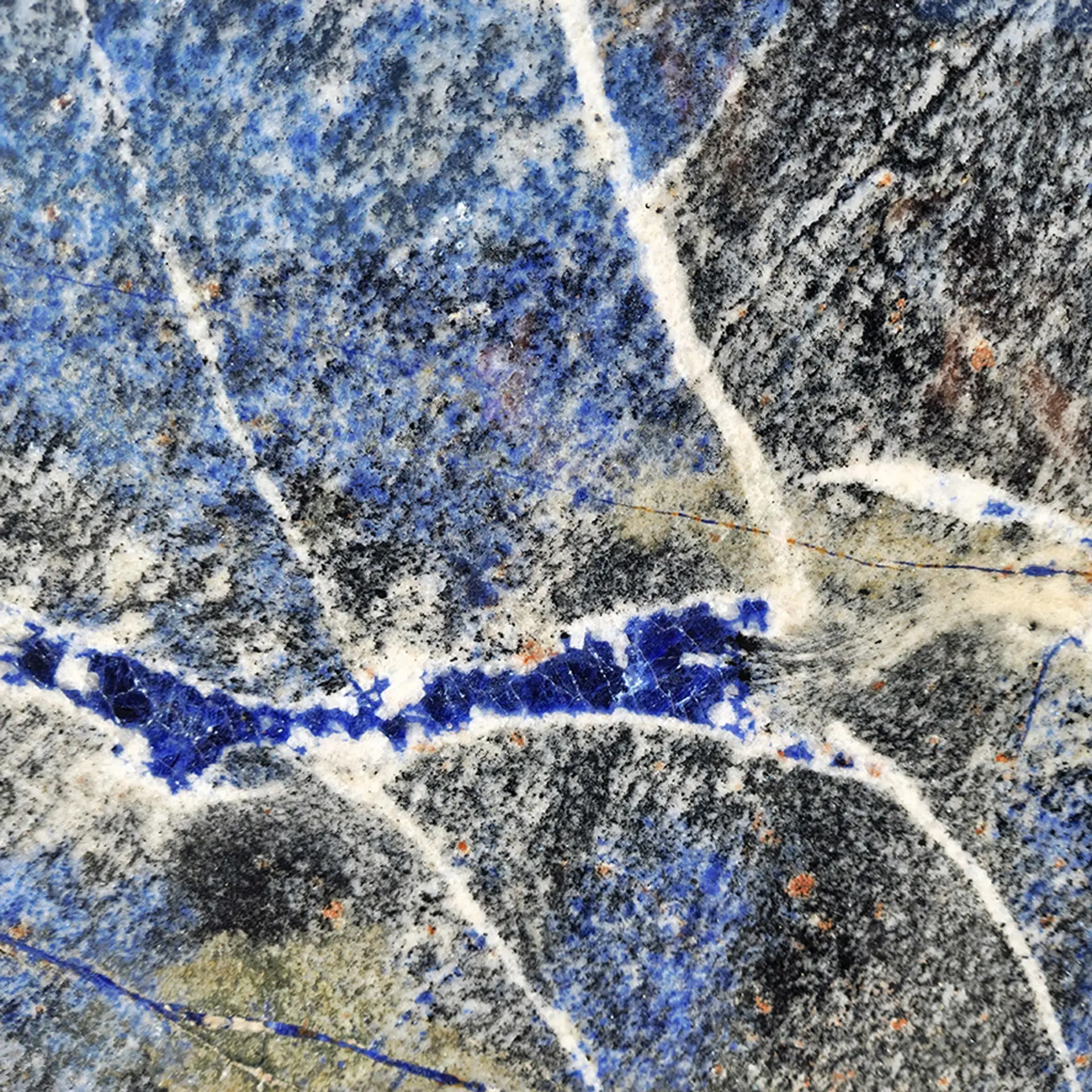
I have a few, often they are due to personal stories, Katuba Blue because I travelled in Zambia & Africa in my youth and would have passed close by to the quarry and love the way they discovered the quarry in the first place. It was a German couple, she was teaching nearby and he had an interest in stone and saw the material being used locally, so went to see where it was coming from and discovered a small but significant seam of nice material. Unfortunately, the best selections have started to run out now. Some stones just stop you in your tracks, such as Lemurian Blue and the Onyx’s. Mexican White Onyx in particular, because it’s quarried by the father of a friend of mine, crazy people with a lot of passion.

Pluck-Kitchen-x-Cullifords-Journal-02
A large slab of Lemurian Blue stone
Pluck-Kitchen-x-Cullifords-Journal-03
A closeup of Katuba Blue stone

Pluck-Kitchen-x-Cullifords-Journal-01
'The Polo'
What is the biggest piece you’ve dealt with?
We generally deal in slabs, bringing in weekly trucks of approximately 24 tonnes of materials into the yard. Notable single lumps would be the one we called ‘The Polo’ bought in especially for an artist’s enormous abstract sculpture. We also brought in a large 5.5 tonne piece this summer for a fireplace!
And finally, what worktop do you have in your kitchen?!
We have a Honed Carrara work top, we were lucky to find a 350cm long slab, so the main island run was cut from one piece. Then we have other areas of the kitchen in Katuba Blue, and a small drinks bar and cabinet in Lemurian Blue.
It’s always a joy to see what lovely material (or multiple!) our clients choose to top their Pluck cabinetry and furniture…one of the wonderful options being luxurious natural stone. At Pluck HQ we have worktop samples galore and our design team have a little black book of suppliers, including Cullifords who we’ve been working with for years! We recently had the pleasure of asking Oliver Webb, Director at Cullifords, all of our burning stone questions. Big thanks for all the fun facts, top tips, family favourites and more…enjoy!
Pluck-Kitchen-x-Cullifords-Journal-04
Oliver Webb, Cullifords Director
Tell us a bit about the history of Gerald Culliford…you’ve been in the game for a long time!
Cullifords has been in the stone business for over 60 years, although the story goes back further than that. Our history reaches back to the Culliford family before the war, and to the historic stone companies of Carrara in Italy, while stone has been sold from our London/Surrey site for nearly 100 years. Today the Kingston yard holds more than 3,000 slabs, but the principles are much the same: find interesting, good-quality stone, know it properly and give people honest advice about where it will work.
And your own story…do you love rocks?!
Yes! I’ve always had an interest in geology, ever since GCSEs and A levels (don’t ask what I got in A level Geo though). I also did Business Studies (A level & Degree), which complements well with James’s (business partner) degree in Geology!!
Is natural stone practical for kitchens?
Yes – provided you choose the right stone for the way you live. That is why there isn’t a completely clear-cut answer. A dense granite or a true quartzite can be extremely hard-wearing, whereas marble is softer and acid-sensitive, so lemon, wine and similar substances can etch it even when it is sealed. Marble can still make a wonderful worktop if you are happy for it to develop a patina. The key is matching the material to the client’s expectations rather than pretending every natural stone behaves in the same way.
What do you look for in a good piece of stone?
It is a mixture of aesthetics and structure. We look at the balance and direction of the veining, colour, natural variation and how several slabs from a block work together, but also at fissures, seams, reinforcement, and anything that could affect fabrication. We work closely with long-standing quarries and suppliers, and our experienced buyers select material with both appearance and structural integrity in mind.
What’s your best tip for getting a stain out of natural stone?
First, if the material has been well sealed it is unlikely you will get a stain. Secondly, don’t panic and don’t reach automatically for a strong household cleaner. Blot a spill rather than spreading it, then use warm water and a pH-neutral cleaner intended for natural stone. The right treatment depends on both the stone, and the cause of the mark, acids or harsh abrasives can make matters worse – particularly on marble. For a stubborn stain, I would rather have a competent stone specialist identify it and treat it properly with something like a poultice rather than experiment with aggressive chemicals.
Which is the most practical finish for stone in a kitchen – honed or polished?
Generally, I’d recommend a honed finish for a kitchen. A honed surface has a softer, more muted appearance and can help disguise etching and everyday marks more effectively than a highly polished surface. Honed and Satinato finishes are becoming increasingly popular, and we’re seeing the same trend in ceramics too. Finishes such as Cashmere are gaining favour because they have a subtle, tactile look, whereas a highly polished finish can sometimes feel overly glossy and make marks or imperfections more noticeable.
Can you explain in layman’s terms the differences between marble, quartzite and granite?
Marble is essentially limestone transformed by heat and pressure. It is beautiful and characterful, but its calcite content means it’s softer than the harder stones. Quartzite starts life as quartz-rich sandstone and is transformed by heat and pressure into a tight interlocking, quartz-rich stone; quartzite is generally very hard and well suited to worktops. Granite is an igneous stone (coming from magma below the earth’s crust), typically containing minerals such as quartz and feldspar, and many granites are exceptionally durable. The slight complication is that commercial stone names do not always map perfectly onto geological classifications, so we prefer to advise on the actual material rather than rely on a label alone. Limestone, slate, and onyx are other natural categories, while engineered quartz and porcelain/ceramic are manufactured surfaces rather than quarried slabs of natural stone.
Tell us about how tech advancements have affected your business…
The fundamentals genuinely haven’t changed: we are still selecting physical slabs and helping people choose something that nature made. What technology has changed is how accurately and quickly we can catalogue, photograph, and share those slabs. Every block can now be photographed, measured, and recorded, customers can browse live ranges online before visiting, and high-quality imagery makes it far easier to discuss layout and variation with designers and fabricators. At the same time, manufacturing technology has created completely new categories alongside natural stone – SapienStone 4D ceramics, for example, now carry decoration through the body of the slab so exposed edges and curved details look much more coherent.
Pluck-Kitchen-x-Cullifords-Journal-15
Culliford's stone yard, photography by Raft Creative
What is the process to buy a slab from you?
We are primarily a wholesale slab supplier rather than a fabricator or installer. A customer can visit our Kingston Upon Thames yard, see the full slabs in person, and choose the material they love; we can then reserve it and liaise with their chosen fabricator. The fabricator measures the kitchen, works out the cutting and layout, buys the slab from us, fabricates it, and installs the finished worktop. It can sound unusual at first, but it means each part of the job is handled by the specialist responsible for it. We can also recommend experienced fabricators where needed.
Where does most natural stone come from?
There isn’t one answer because different stones belong to different geology. Our range is genuinely international: we source from trusted quarries and suppliers around the world, including Brazilian quartzites and granites, Indian and Italian marbles, Portuguese limestones, and Norwegian natural stone. That global variety is one of the joys of the material, but if you are worried about a natural stone’s CO2 footprint, consider firstly that the manufacturing element is built in by nature, so nothing has been created in a kiln to make the material like quartz or ceramic. And there are many stones available locally from Europe, so the distance travelled can be limited.
…so in that case can it be considered a sustainable material?
It can be a very good long-term material choice, but I’m cautious about sweeping green claims. Natural stone is a mineral material and does not require kiln firing to create the stone itself, and a well-selected surface can have a very long service life, be repaired or refinished and, in some cases, reused or recut. But quarry yield, processing, transport, slab weight, resin or other treatments and end of life all matter. At Cullifords we have worked with The Sustainability Hub to assess products across their lifecycle and help clients make informed comparisons rather than simply labelling something “sustainable”.
In theory, could we run out of stone?!
Geologically, stone is a finite natural resource, but the practical issue is usually access to a particular quarry bed or selection rather than the planet suddenly running out of stone. Individual stones can become scarce or quarries can close, and a distinctive block can never simply be manufactured again. That is part of what makes natural stone special – and also why using it thoughtfully, getting good yield from slabs and valuing its long-life matter.
Do you have a favourite stone?
I have a few, often they are due to personal stories, Katuba Blue because I travelled in Zambia & Africa in my youth and would have passed close by to the quarry and love the way they discovered the quarry in the first place. It was a German couple, she was teaching nearby and he had an interest in stone and saw the material being used locally, so went to see where it was coming from and discovered a small but significant seam of nice material. Unfortunately, the best selections have started to run out now. Some stones just stop you in your tracks, such as Lemurian Blue and the Onyx’s. Mexican White Onyx in particular, because it’s quarried by the father of a friend of mine, crazy people with a lot of passion.
Pluck-Kitchen-x-Cullifords-Journal-02
A large slab of Lemurian Blue stone
Pluck-Kitchen-x-Cullifords-Journal-03
A closeup of Katuba Blue stone
Pluck-Kitchen-x-Cullifords-Journal-01
'The Polo'
What is the biggest piece you’ve dealt with?
We generally deal in slabs, bringing in weekly trucks of approximately 24 tonnes of materials into the yard. Notable single lumps would be the one we called ‘The Polo’ bought in especially for an artist’s enormous abstract sculpture. We also brought in a large 5.5 tonne piece this summer for a fireplace!
And finally, what worktop do you have in your kitchen?!
We have a Honed Carrara work top, we were lucky to find a 350cm long slab, so the main island run was cut from one piece. Then we have other areas of the kitchen in Katuba Blue, and a small drinks bar and cabinet in Lemurian Blue.